
Diamond Abrasive Belts: Definition, Structure, and Classification
Diamond abrasive belts are specialized coated abrasives designed for precision grinding and polishing applications. These belts are made by adhering synthetic diamond to a flexible substrate using resin or metal binders. They are widely used across various industries for machining hard, brittle non-metallic materials as well as non-ferrous metals.
Definition of Diamond Abrasive Belts
Diamond abrasive belts are essential tools in mechanical engineering, particularly in the field of abrasive processing. Their primary function is to provide high grinding efficiency, durability, and excellent surface finish when machining materials such as stone, glass, ceramics, and cemented carbide. The unique properties of diamond abrasives make them ideal for applications demanding extremely high precision and high-quality surface finishes.
The structure of a diamond grinding belt mainly consists of three parts:
Substrate: The substrate is the flexible backing material that supports the diamond abrasive, determining the flexibility and durability of the abrasive belt. Common substrates include paper, cloth, metal strips, and polyester film.
Diamond abrasive: Diamond particles are the cutting agent in abrasive belts, giving them grinding and polishing properties. Synthetic diamond is widely used due to its high hardness and ability to effectively cut hard materials.
Adhesive: The adhesive is the substance that bonds the diamond abrasive to the substrate. It is mainly divided into two categories: resin-based adhesives and electroplated adhesives. The choice of adhesive will affect the performance and application of the abrasive belt.
Structure and Classification of Diamond Abrasive Belts
Structure of diamond abrasive belts
The structure of diamond abrasive belts is crucial to their performance and applications. The three components—substrate, abrasive, and binder—work together to create products that meet specific grinding and polishing needs.
Matrix type:
Paper: Lightweight and flexible, suitable for light applications.
Cloth: More durable, ideal for heavy-duty grinding jobs.
Metal strips: Provide rigidity for special applications.
Polyester film: It has excellent flexibility and tear resistance.
Binding type:
Resin-based adhesives: These adhesives form a multi-layered abrasive structure, suitable for both dry and wet grinding. They offer good flexibility and are suitable for a variety of materials.
Electroplated adhesives: These adhesives form a single-layer abrasive structure with extremely high bonding strength. They are known for their robustness and durability and are typically used in applications requiring high precision.
Manufacturing process: Diamond abrasive belts are typically manufactured using an electrostatic spraying process, which attaches diamond abrasive grains to a substrate. This process ensures that the abrasive grains are aligned in a specific direction, thereby improving cutting force and overall product performance.
Types of diamond abrasive belts
Based on the adhesive and structure, diamond grinding belts can be divided into two main categories:
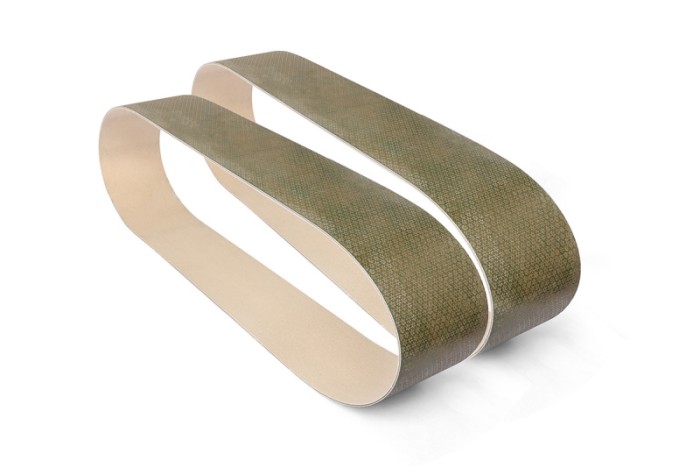
Electroplated diamond abrasive belt:
These abrasive belts feature a single-layer structure with high bonding strength, resulting in strong abrasive adhesion. They are ideal for precision grinding and are commonly used in applications requiring extremely high durability and cutting efficiency.
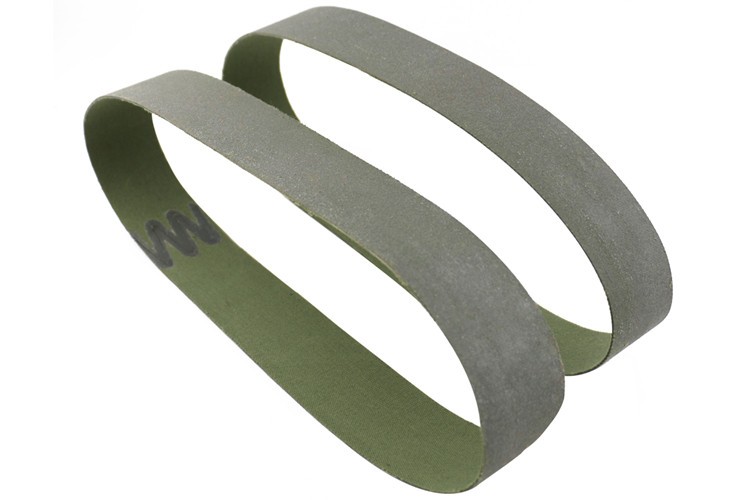
Resin-bonded diamond abrasive belts:
These abrasive belts feature a multi-layered abrasive structure, suitable for both dry and wet machining. They are versatile, capable of machining a wide variety of materials, and are suitable for jobs requiring high-quality surface finishes.
Strategies to Extend the Life of Abrasive Belts
Reduce initial wear:
When using a new abrasive belt, it is best to pre-grind it for a period of time with a lower contact pressure. This allows the abrasive grains to settle to the optimal cutting position, avoiding excessive wear and ultimately extending the service life of the abrasive belt.
Use grinding aids and grinding fluid:
Adding grinding aids or grinding fluid can significantly reduce friction between abrasive grains and the workpiece. Reduced friction decreases the heat generated during grinding, which could otherwise lead to premature wear of the abrasive belt.
Increase the belt circumference:
When machine tool conditions permit, appropriately increasing the belt circumference can enhance cooling and increase the total number of abrasive grains during grinding. This adjustment helps to distribute the workload more evenly across the belt, thereby reducing localized wear.
Optimize conveyor belt speed:
Increasing the belt speed results in a smoother surface and reduces abrasive breakage and wear. Higher speeds enable more efficient cutting, thereby improving the overall performance of the belt.
Gradually increase the grinding pressure:
Gradually increasing the grinding pressure during operation can enhance the grinding effect. This method breaks down the abrasive grains, creating new cutting edges and restoring the cutting ability of the abrasive belt—a phenomenon known as the self-sharpening effect. This method not only improves machining performance but also extends the service life of the abrasive belt.
Select the appropriate abrasive particles:
Choosing harder abrasive particles or employing traditional abrasive coating processes to improve the belt’s cutting performance also helps extend its service life. The choice of abrasive plays a crucial role in the belt’s durability and effectiveness in various applications.
Product Characteristics of Diamond Abrasive Belts
Diamond abrasive belts are designed for high-speed grinding and have several key characteristics that improve their performance and lifespan:
High grinding efficiency: The addition of synthetic diamond gives it excellent cutting ability, making these abrasive belts highly efficient in grinding hard materials.
Excellent durability: Diamond belts are designed to withstand demanding grinding operations and have a longer service life compared to conventional belts.
High surface finish and gloss: Diamond abrasive belts, after processing, provide high-quality surface finish and gloss, making them ideal for applications where aesthetics are important.
Flexibility: The flexible substrate of diamond abrasive belts allows them to conform to complex curved surfaces, making them suitable for a variety of grinding tasks.
Dual-purpose capability: These conveyors can be used in both wet and dry applications, providing flexibility in processing scenarios and enhancing their availability across various industries.
Self-sharpening property: The unique design of diamond abrasive belts gives them a self-sharpening effect during grinding. As pressure gradually increases, the abrasive grains break down and create new cutting edges, thereby restoring cutting ability and extending the belt’s lifespan.
-
Online service
-
Official wechat
account
-
QQ:40933769
-
E-mail:
sales@z-lion.com
Online service
Please feel free to give your inquiry in the form below. We will reply you in 24 hours.