
Dust Control When Cutting Concrete: Safety, Compliance & Solutions
When you manage a construction site, mastering dust control when cutting concrete is non-negotiable. Concrete dust poses serious health risks and can result in hefty fines if not handled properly. Therefore, protecting your team requires a highly proactive strategy. In this guide, you will discover actionable strategies to reduce dust when cutting concrete effectively. Furthermore, you will learn how to select the right equipment to improve your project efficiency. Upgrading your diamond tools is a critical first step. You can explore our premium diamond cutting discs to experience faster, cleaner cuts right from the start.
Why Dust Control Is Critical in Concrete Cutting
Understanding the risks involved in concrete cutting is the foundation of a safe job site. It is not merely about keeping the area tidy; it is about addressing serious, often invisible hazards that threaten both worker safety and regulatory compliance. Before you can implement effective solutions, it’s vital to understand exactly what threats you face.
What Causes Dust When Cutting Concrete?
Abrasive friction is the primary cause of dust generation during concrete cutting. When a diamond saw blade cuts aggregate and cement slurry, it breaks the hard material into fine particles. The high-speed cutter then ejects these particles into the air, creating a large dust cloud.
What Is Crystalline Silica Dust and Why It Matters
Concrete is rich in quartz, which means that cutting concrete releases crystalline silica dust. These tiny particles are 100 times smaller than grains of sand and are invisible to the naked eye. However, they pose a serious threat to respiratory system.
Is Concrete Dust Harmful to Your Health?
Absolutely, concrete dust is indeed harmful. Inhaling silica dust can cause silicosis, an incurable and progressively worsening lung disease. Furthermore, long-term exposure significantly increases the risk of lung and kidney disease. Therefore, taking dust precautions is not only a wise move, but also a crucial life-saving measure.
How Much Concrete Dust Exposure Is Dangerous?
You might wonder how much exposure to concrete dust is considered dangerous. The Occupational Safety and Health Administration (OSHA) sets the Permissible Exposure Limit (PEL) at exactly 50 micrograms per cubic meter of air over an 8-hour shift. Exceeding this limit will result in severe penalties and endanger workers' health.
Health Risks and Workplace Safety Requirements
Ignoring concrete dust is a direct violation of international safety standards. Regulatory bodies around the world have established strict rules to protect workers from the harmful effects of silica exposure. Understanding these health risks and mandatory requirements is crucial to ensuring the smooth operation of construction sites and the safety of teams.
Dust in the Workplace HSE Guidelines
Health and Safety Executive (HSE) guidelines mandate strict dust control measures. You must rigorously assess the risk, prevent exposure, and control the dust directly at the source. Consequently, relying solely on paper masks is no longer acceptable in modern construction.
Required Respiratory Protection and PPE
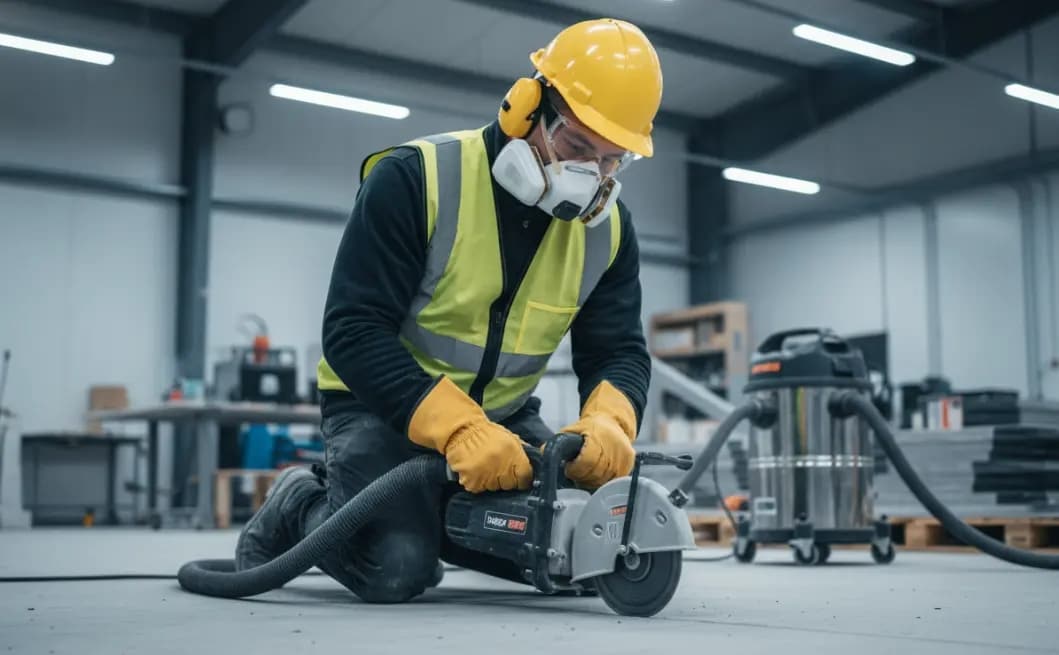
You must provide proper respiratory protection for your staff. Even when you utilize water suppression, workers often need N95 masks or half-face masks with P100 filters. Always perform strict fit testing to ensure an effective seal around the face.
Effective Methods to Reduce Dust When Cutting Concrete
Choosing the appropriate dust suppression method can ensure your project safety and efficiency. Below is a comparison of different techniques to help you make decision.
Wet Cutting vs Dry Cutting: Key Differences
| Feature | Wet Cutting (Water Suppression) | Dry Cutting with HEPA Extraction |
|---|---|---|
| Dust Reduction | Up to 85% airborne reduction | Up to 90% capture at source |
| Blade Life | Extended life (water cools blade) | Shorter life (requires airflow to cool) |
| Cleanup Type | Creates heavy concrete slurry | Dry, contained debris collection |
| Best Application | Deep cuts, outdoor road jobs | Indoor renovations, near electrical wiring |
Advantages of Water Suppression Systems
Water suppression systems are widely regarded as the most useful method for dust control on job sites. The continuous flow of water captures dust particles before they become airborne. Additionally, it is also helpful to cool the diamond blade, significantly extending its lifespan.
Limitations of Wet Cutting
However, wet cutting still has some limitations. It will create a messy concrete slurry that is difficult to handle. You need proper collection and disposal to prevent environmental pollution. What's more, you cannot use water near live electrical circuits or in upscale commercial spaces.
Dry Cutting with HEPA Dust Extraction
When wet cutting is impossible, you must apply dry cutting with robust extraction systems.
How HEPA Dust Extraction Works
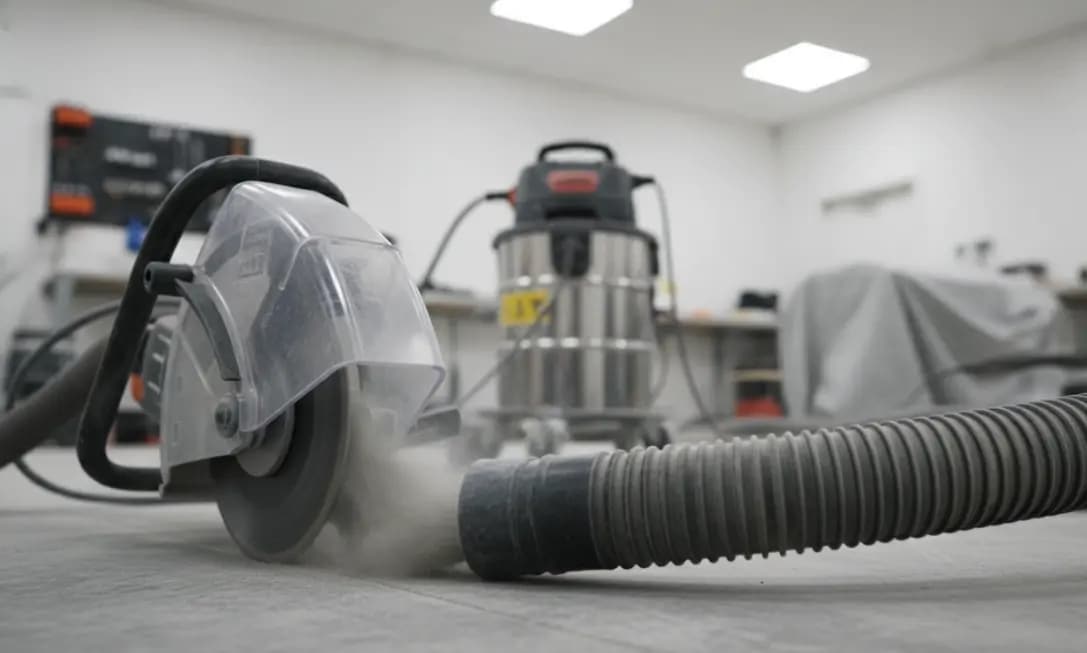
This method involves attaching a dedicated dust cover directly to the saw, which is then connected to an industrial vacuum cleaner that removes dust from the cutting area. The HEPA filter is capable of capturing up to 99.97% of particles as small as 0.3 microns.
Benefits of Industrial Vacuum Systems
Industrial vacuum systems eliminate the need for wet slurry cleaning. Thus, it is ideal for interior finishing, hospital renovations, and precise architectural modifications.
Water Suppression Systems in Construction
Modern construction sites are increasingly reliant on integrated water suppression. Many walk-behind cutting machines are equipped with built-in water pumps. Well, it can provide a continuous and precise flow of water to the cutting edge of the blade.
Combining Methods for Maximum Dust Control
To maximize safety and efficiency, you can combine methods. For example, try to combine a water suppression with a high-capacity air scrubber. This method can effectively clean the air around the workplace.
Equipment and Tools for Professional Dust Control
Effective dust control in concrete cutting relies heavily on the right equipment and tools. Investing in specialized systems not only enhances safety but also improves efficiency on the job site. Below are essential tools and technologies that can help you manage dust effectively.
HEPA Dust Extraction and Industrial Vacuum Systems
Standard shop vacuums cannot handle dense concrete dust. To ensure optimal dust control, you must invest in heavy-duty vacuums with automatic filter-cleaning mechanisms. These systems maintain continuous suction without frequent clogging.
Dust Shrouds and Tool Attachments
A high-quality dust shroud captures the debris exactly at the source. It is essential to ensure that the shroud fits your grinder or saw perfectly. Otherwise, hazardous dust will rapidly escape through the gaps.
Select the Right Diamond Blade to Reduce Dust
The specific blade you choose directly impacts dust generation. A specialized blade can cut faster, reducing the total time you spend creating dust. For instance, using laser-welded blades with optimized segments ensures smoother, cleaner cuts. You can browse our Z-LION professional concrete diamond blades to find tools specifically designed for low-resistance cutting, which minimizes airborne particles.
Integrated Dust Control in Modern Cutting Tools
Today, leading tool manufacturers integrate dust channels directly into the equipment housings. These advanced designs optimize the internal airflow, pushing the dust straight into the extraction port efficiently.
Best Practices for Dust Prevention on Job Sites
To ensure strict compliance and absolute safety, follow this daily troubleshooting checklist:
Pre-Work Planning and Risk Assessment
Identify the concrete aggregate type and choose between wet or dry cutting.
Conduct a daily toolbox talk on dust hazards with your entire crew.
Combining Equipment and Techniques Effectively
Verify water pump flow rates before making the very first cut.
Test the industrial vacuum suction to ensure hoses are clear of blockages.
Worker Training and Dust Awareness
Ensure every single operator wears their assigned, fit-tested PPE correctly.
Teach operators to recognize warning signs indicating when a HEPA filter needs immediate replacement.
Maintenance of Dust Control Equipment
Empty vacuum collection hoppers regularly to maintain peak suction.
Clean water delivery nozzles thoroughly to prevent stubborn blockages from dried concrete slurry.
Attention: Dust Suppression Regulations and Compliance Standards
Staying compliant is not just about avoiding fines; it is a strict legal requirement to keep your site operational. Navigating these federal and local rules ensures you protect your workforce while shielding your company from massive liability.
Overview of OSHA Silica Standards
OSHA enforces rigorous rules specifically targeting respirable crystalline silica. The standard requires you to limit worker exposure exclusively through proven engineering controls, such as water delivery systems or heavy-duty vacuums. If you fail to implement these specific controls, OSHA will issue severe citations and immediately halt your operations.
Construction Dust Control Regulations
Beyond federal mandates, local construction dust control regulations dictate exactly how you manage worksite emissions. You must develop, implement, and maintain a written exposure control plan on-site. This written plan must clearly identify every single task that generates dust and detail the exact suppression methods your team will execute.
Permissible Exposure Limits (PEL)
You must strictly adhere to the Permissible Exposure Limits (PEL). Currently, OSHA legally limits silica exposure to just 50 micrograms per cubic meter of air, averaged over an 8-hour shift. Additionally, the standard sets an "Action Level" at 25 micrograms. Reaching this lower threshold instantly triggers mandatory medical surveillance and ongoing air monitoring for your crew.
Mandatory Dust Control Requirements for Contractors
As the lead contractor, you bear the ultimate legal responsibility for site safety. You must permanently designate a competent person to actively enforce the written control plan daily. Furthermore, you must restrict unauthorized access to high-exposure work zones and guarantee that every operator wears fit-tested respiratory protection. Ignoring these mandatory requirements is negligent and entirely preventable.
Final Words: Achieve Safe and Efficient Concrete Cutting
Mastering dust control when cutting concrete protects your team and your company's bottom line. By using water suppression, HEPA extraction, and high-quality PPE, you actively mitigate severe health risks. Furthermore, pairing these methods with premium diamond tools accelerates your project timeline.
Z-LION is a publicly listed enterprise holding 63 patents in diamond tool manufacturing. We provide highly efficient, eco-friendly cutting solutions designed for demanding global contractors. Are you ready to upgrade your site safety and cutting speed simultaneously? Contact our technical team for a quote on concrete cutting discs today.
FAQs About Concrete Dust Control
Why is there still dust when wet cutting?
Sometimes, water flow is simply insufficient to cover the entire cutting depth. You must adjust the water pressure so it reaches the blade's leading edge constantly. Additionally, cutting too fast can push the blade ahead of the water stream, allowing dry dust to rapidly escape.
-
Online service
-
Official wechat
account
-
QQ:40933769
-
E-mail:
sales@z-lion.com
Online service
Please feel free to give your inquiry in the form below. We will reply you in 24 hours.