
How to Level a Concrete Floor: A Guide for Professional Contractors
A sloped or uneven concrete floor is more than just a nuisance. For contractors, an unflatten concrete floor can cause serious problems. It can affect the quality of the finished floor, create safety risks, and lead to unhappy customers. If you're fixing an uneven concrete floor, whether you're installing tile, engineered wood, LVP, or planning a decorative polish, starting with a level surface is essential. An uneven floor can cause furniture to wobble, tiles to crack, and result in an unprofessional finish.
This guide provides a professional approach to diagnosing and repairing uneven concrete. We’ll guide you through the process from initial assessment to final surface finishing, demonstrating how to level a concrete floor. Our goal is to level out a concrete floor and smooth an uneven concrete surface. Your results depend on the tools you use. That’s why it’s important to follow the right steps and use professional diamond grinding tools to achieve a high-quality finish.
What Causes an Uneven Concrete Floor
Before you attempt to repair an uneven concrete floor, first determine where the problem originates. Many factors can cause surface irregularities. Identifying the cause will help you choose the right method for concrete floor leveling.
Pouring and Curing Issues: Often, the problem stems from the initial pouring process. Temperature, humidity, and improper concrete mix ratios can cause the slab to cure unevenly. This can create high spots and low spots in the concrete.
Foundation Settlement or Shifting: Over time, the soil beneath the slab may settle or shift. This can cause the floor to slope and lead to noticeable cracks and depressions. This is a more serious issue that may need a structural assessment.
Residues from Old Flooring: The most common issue is residue from previous flooring. A thin layer of mortar left behind by old tiles, stubborn vinyl adhesive, or thick layers of paint can all cause uneven surface texture. Before installing any new flooring, you must first correct the uneven concrete surface.
Step-by-Step Guide: How to Level a Concrete Floor
To achieve a durable and professional finish, follow this systematic process. This method combines mechanical grinding (to remove high spots ) with targeted filling ( to address low spots). It ensures you can restore a flat concrete surface.
Step 1: Assess and Prepare the Surface
First, you need a clear understanding of the site conditions. Remove all old flooring and baseboards, and clear away debris. Thoroughly sweep and vacuum the area. Clean oil stains with a degreaser, as oil can affect the adhesion of the primer and leveling compound.
Next, identify all high spots and low spots. For small rooms, use an 8-foot or 10-foot straightedge or level. Place it on the floor in different directions to check for unevenness. For large commercial projects, a laser level is more efficient for precisely adjusting the concrete floor level. Mark all problem areas with a marker or chalk: use “H” for high spots and “L” for low spots.
Step 2: Address High Spots with Concrete Grinding
Grinding the concrete floor level is the most critical step for a professional finish. Rather than pouring thick, expensive leveling compounds to fill deep low area, grind down the high spots first. Grinding is the only effective way to remove high spots and old adhesive , and to flatten the concrete surface for the next steps.
Choose the Right Equipment:
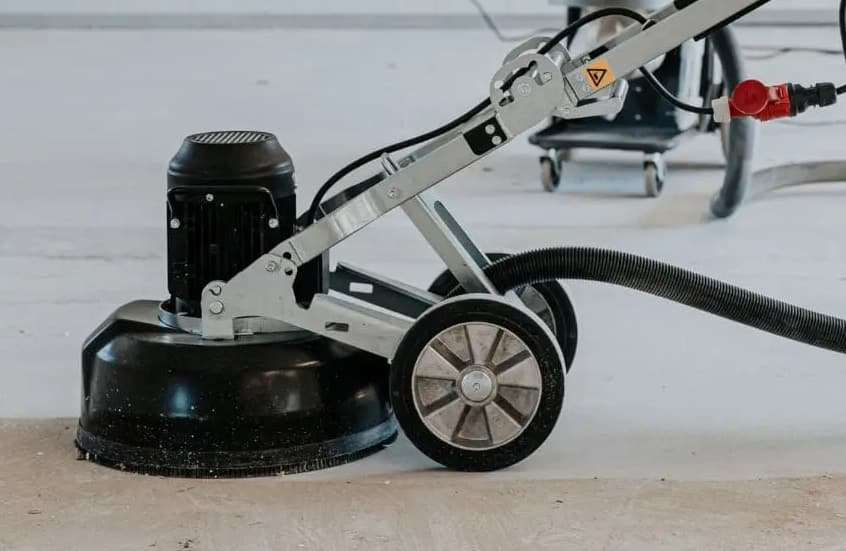
For edges, corners, and small areas, a 7-inch handheld angle grinder equipped with a dust guard is ideal. For large, open areas, a walk-behind floor grinder can save time and labor.
Selecting the Right Tools
When using a grinder to level concrete, the abrasive tools installed are as important as the machine itself. Use high-performance diamond grinding tools (such as diamond cup wheels) to remove high spots in the concrete. If you need to remove thick coatings like epoxy or heavy adhesives, PCD (polycrystalline diamond) grinding discs are the best choice.
Grind in a Systematical Way:
Move the grinder in overlapping passes and blend the edges of high spots so they transition smoothly into the surrounding floor. Always use the grinder in conjunction with an industrial vacuum cleaner to control harmful silica dust.
Step 3: Fill Low Spots and Dips
Once the high spots have been removed, you can begin addressing the low spots. Knowing the difference between concrete patching and leveling helps you select the right material based on the area’s size and depth.
-
Online service
-
Official wechat
account
-
QQ:40933769
-
E-mail:
sales@z-lion.com
Online service
Please feel free to give your inquiry in the form below. We will reply you in 24 hours.