
Efficient Application and Maintenance Strategies for Diamond Saw Blades
The Importance of Diamond Saw Blades
Diamond saw blades are essential tools in construction and manufacturing, especially suitable for cutting hard and brittle materials such as concrete, marble, and granite. Their performance directly affects cutting efficiency and the overall lifespan of the saw blade. Understanding how to effectively use and maintain diamond saw blades is crucial for maximizing their effectiveness and ensuring operational safety.
Advantages of Diamond Saw Blades
High cutting efficiency: Diamond saw blades are designed for easy cutting of hard materials. Their sharp diamond grains enable fast and precise cuts, making them ideal for both professional and DIY projects.
Multifunctionality: These blades can be used for a variety of purposes, including construction, bricklaying, and tile laying. They are suitable for a wide range of cutting tasks, from straight cuts to complex shapes.
Durability: Diamond saw blades are known for their long lifespan. If properly maintained, they can last longer than conventional saw blades made of other materials, thus reducing replacement frequency and associated costs.
Application Scenarios of Small Diameter Saw Blades
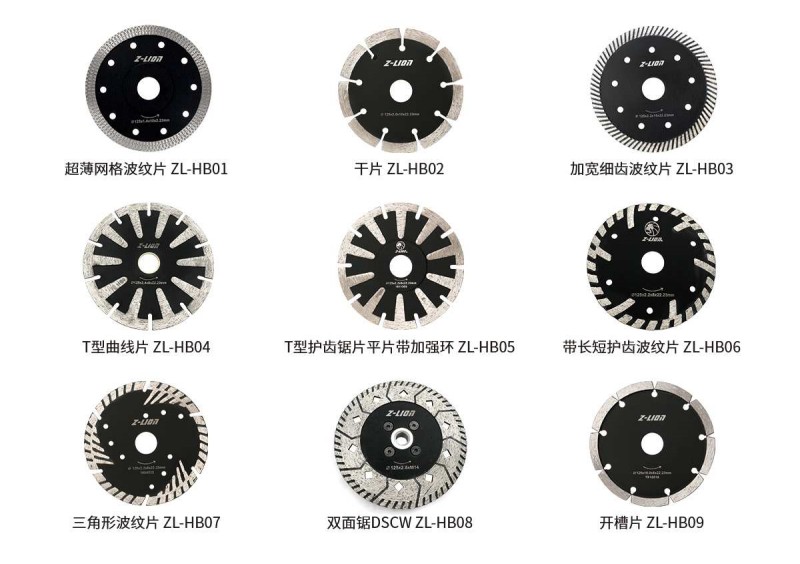
Small-diameter diamond saw blades are designed for cutting hard and brittle materials. They are typically used with handheld cutters, angle grinders, and benchtop cutters. Here are some typical applications:
Marble and granite cutting: Small diameter blades are ideal for precise cutting of marble and granite, which are commonly used for countertops and decorative components.
Concrete cutting: These blades are effective at cutting concrete slabs, blocks, and other structures, making them an essential tool for construction and renovation projects.
Ceramics and refractory materials: Small-diameter blades can also be used to cut ceramics and refractory materials, but due to their high hardness, special tools are required.
Select Saw Blade Type
Understanding the saw blade manufacturing process
When selecting a saw blade, its manufacturing process must be considered, as this affects the blade’s performance and durability. The two most common processes are sintering and laser welding.
Sintered blade:
Description: Sintered blades are made by pressing and heating a mixture of metal powder and diamond particles. This process creates a strong bond, securing the diamond sheet in place.
Advantages: Sintered blades are popular due to their high production efficiency and low cost. They are suitable for efficient cutting operations and can handle a variety of materials, including concrete and masonry.
Disadvantages: However, sintered inserts may face risks such as insert breakage and insert detachment during use, especially under heavy loads or improper operation.
Laser welding blades:
Product Description: Laser-welded blades are manufactured by using a laser to weld diamond blades onto a steel core. This method enables a strong and durable connection.
Advantages: Laser-welded blades offer higher strength, longer service life, and improved safety. They are ideal for harsh applications and can withstand higher temperatures and pressures.
Disadvantages: The main disadvantage is that they are more expensive compared to sintered blades, which may not be suitable for all budgets.
Choose the blade that suits your needs
When selecting a saw blade, please consider the following factors:
Cutting materials: Different materials require different types of blades. For example, diamond blades are ideal for cutting hard materials such as concrete and stone, while carbide blades are better suited for cutting softer wood.
Cutting application: Determine whether you need the blade for roughing, finishing, or a special purpose. This will affect your choice of blade type and design.
Budget: Assess your budget and weigh the costs against the expected performance and lifespan of the inserts. While sintered inserts may be more economical, investing in laser-welded inserts can result in long-term cost savings by reducing replacement frequency.
Troubleshooting During Use
Even with the right blades, problems can still occur during operation. Here are some troubleshooting tips to help you resolve common issues:
Abnormal sound:
If you hear any unusual noises during operation, stop immediately. Check the blade for damage, loose screws, or misalignment. Continuing to operate a damaged blade may lead to more serious problems or accidents.
Noise or severe vibration:
If you encounter significant noise or vibration during cutting, stop the machine immediately. Inspect the saw blade for cracks or breaks. If any damage is found, replace the saw blade before continuing work.
Blade clogging or dulling:
A clogged or dull blade can affect cutting performance. If this happens, you can use a ceramic grinding wheel or firebrick to sharpen the blade and restore its sharpness. Regular maintenance can extend the life of your blade.
Aperture compatibility:
Ensure the bore diameter of the saw blade matches the spindle diameter of the cutting machine. If the dimensions do not match, adjust using appropriately sized washers. However, be careful not to allow the washers to fall off, as this will cause the saw blade to vibrate and deform, rendering it unusable.
-
Online service
-
Official wechat
account
-
QQ:40933769
-
E-mail:
sales@z-lion.com
Online service
Please feel free to give your inquiry in the form below. We will reply you in 24 hours.